Get Free Express Shipping when you place an order over $150





Ketamine Nasal Spray: Uses, Ingredients, Safety and What You Should Know

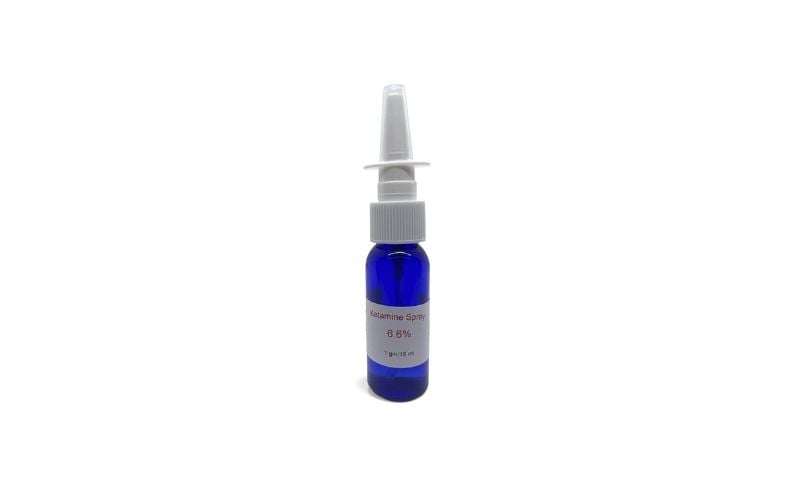
Ketamine nasal spray is a term that can refer to different products, including prescription esketamine used under medical supervision and other nasal formulations that may be marketed as containing ketamine. Understanding the difference is important because the ingredients, regulatory status, medical uses, and safety requirements can vary considerably.
Interest in ketamine-based treatments has grown because researchers have investigated their potential role in mental health care, particularly for certain patients with depression that has not responded adequately to other treatments. However, not every product described as a ketamine nasal spray is an approved medicine, and a product’s name alone cannot confirm its composition or effectiveness.
This guide explains how ketamine nasal sprays differ, what consumers should know about product labels, the risks associated with ketamine, and the regulations that apply in Canada.
What Is Ketamine Nasal Spray?
Ketamine nasal spray describes a formulation intended to deliver a ketamine-related substance through the nasal passages. However, the term does not identify one standardized product.
One important distinction is between ketamine and esketamine.
Ketamine is a dissociative anesthetic used in medical settings. Esketamine is one of the two principal enantiomers of ketamine, meaning it has a particular three-dimensional molecular arrangement. Although the compounds are closely related, they are not interchangeable in every medical or regulatory context.
In Canada, Spravato is a prescription nasal spray containing esketamine. It is authorized for specified uses in adults with major depressive disorder and is subject to a controlled distribution program and professional monitoring requirements.
Other products described online as ketamine nasal sprays may have different ingredients, formulations, or regulatory statuses. Without reliable documentation, their contents and suitability for medical use cannot be confirmed.
Ketamine vs. Esketamine: Understanding the Difference
The terms ketamine and esketamine are sometimes used interchangeably in online discussions, but they refer to different chemical descriptions.
Ketamine
Ketamine is a dissociative anesthetic. In authorized medical settings, it is used for anesthesia and related clinical purposes.
Researchers have also investigated ketamine for certain mental health conditions. Some uses outside its established indications are described as off-label, meaning a healthcare professional is prescribing an authorized medication for a use that is not specifically included in its approved product labeling.
Off-label prescribing does not automatically mean that a particular formulation or treatment is approved for that purpose.
Esketamine
Esketamine is the S-enantiomer of ketamine. Spravato is a prescription esketamine nasal spray authorized in Canada for specified circumstances involving moderate to severe major depressive disorder.
Treatment eligibility, administration, and monitoring must follow the applicable product information and clinical requirements.
Why the distinction matters
A product labeled as containing ketamine should not automatically be assumed to contain esketamine or to have the same evidence, dosing instructions, or authorization as Spravato.
The active ingredient, formulation, concentration, manufacturer, and regulatory status all matter when evaluating a medication.
What Is Spravato Nasal Spray Used For?
Spravato is a prescription medicine containing esketamine. In Canada, it is authorized for specific circumstances involving major depressive disorder in adults, including cases where other antidepressant treatments have not provided an adequate response.
Its use requires careful assessment by qualified healthcare professionals.
Treatment decisions depend on the patient’s diagnosis, medical history, previous treatment response, other medications, and potential risks. The prescribing information defines the circumstances in which the medicine may be used.
Spravato is not an ordinary over-the-counter nasal spray. It is provided through a controlled distribution program, with administration and post-treatment monitoring requirements.
Research into ketamine and esketamine has generated interest in their effects on brain signaling, including pathways involving glutamate. However, research findings should not be interpreted as proof that every ketamine-containing product can treat depression or other mental health conditions.
A product marketed online does not become an approved treatment simply because it uses terminology associated with an established medicine.
What Ingredients May Be Found in a Ketamine Nasal Spray?
The ingredients depend on the specific formulation.
A regulated prescription medication has documented active and inactive ingredients. An unverified product sold online may not provide the same level of reliable information.
Active ingredient
The active ingredient is the substance responsible for the medicine’s intended pharmacological action.
For example, Spravato contains esketamine as esketamine hydrochloride. A product described simply as ketamine nasal spray may claim to contain ketamine, but its actual composition should not be assumed without reliable evidence.
Inactive ingredients
Inactive ingredients help form the solution and maintain its required pharmaceutical characteristics.
Depending on the formulation, these may serve functions such as controlling acidity, maintaining stability, or providing a suitable liquid vehicle.
The exact ingredients vary by product. Information from one prescription medication should not be applied automatically to another nasal formulation.
Concentration and labeling
A medicine’s label should clearly identify its active ingredient and relevant strength.
It is important to distinguish between the concentration of a substance in a liquid and the total quantity contained in a package or device. These measurements describe different things.
For an unverified product, a printed concentration does not independently prove that the solution contains the stated amount of the named substance.
How to Evaluate Ketamine Nasal Spray Product Claims
Product descriptions may use terms such as pharmaceutical grade, high purity, laboratory tested, or medical grade. These phrases should not be treated as proof of regulatory approval or clinical effectiveness.
When reviewing information about a medication, consider the following points.
1. Verify the active ingredient. Determine whether the product claims to contain ketamine, esketamine, or another substance. These names should not be treated as equivalent.
2. Check the manufacturer. Reliable prescription medicines have identifiable manufacturers and official product information.
3. Review the regulatory status. A product’s availability online does not establish that it is authorized for sale or medical use in Canada.
4. Look for official product documentation. For authorized medicines, the official product monograph describes the approved indications, composition, warnings, and monitoring requirements.
5. Treat unsupported testing claims cautiously. A statement that a product has been laboratory tested does not establish that it is an approved medicine, that it meets pharmaceutical manufacturing standards, or that it is suitable for human use.
These distinctions are particularly important for products sold through websites that do not provide independently verifiable pharmaceutical documentation.
What Are the Potential Risks of Ketamine?
Ketamine can cause significant physical and psychological effects. Its risks depend on the substance, formulation, exposure, individual health factors, and whether it is used under appropriate medical supervision.
Potential effects include:
- Dizziness and drowsiness.
- Nausea and vomiting.
- Increased blood pressure and heart rate.
- Changes in perception or awareness.
- Dissociation, including feeling detached from one’s body or surroundings.
- Confusion and impaired coordination.
More serious complications can occur. Sedation and impaired awareness may compromise safety, while increases in blood pressure can be concerning for people with certain cardiovascular conditions.
Ketamine is also associated with misuse and dependence risks. Repeated or chronic exposure has been associated with urinary tract and bladder problems, as well as liver and biliary complications.
The absence of immediate symptoms does not establish that an unverified product is safe.
Ketamine Nasal Spray and Medication Interactions
Ketamine-related medicines can interact with other medications and substances.
Medicines that cause sedation, including certain sleep medications, sedatives, and opioid pain medicines, may increase concerns about impaired awareness and other adverse effects when combined with ketamine-related treatments.
Other medications can affect blood pressure or interact with treatment in ways that require individual assessment.
Patients should provide their healthcare professional with a complete list of prescription medicines, non-prescription products, and supplements they use.
Do not start, stop, or combine medicines based on online product descriptions. A qualified clinician or pharmacist can assess potential interactions in the context of the specific medication and the patient’s medical history.
Why Medical Supervision Matters
Prescription esketamine treatment involves more than the administration of a nasal spray.
Before treatment, healthcare professionals assess the patient’s suitability and consider relevant medical and psychiatric history. They also review medications, potential contraindications, and risks.
During and after administration, monitoring may be necessary for sedation, dissociation, changes in blood pressure, and other adverse effects.
These requirements are not merely administrative. They are part of the risk-management framework for a medicine with potentially significant effects on awareness and physical functioning.
The requirements for Spravato should not be assumed to apply identically to every ketamine formulation, but an unverified product should not be regarded as a safe substitute for an authorized medicine.
Is Ketamine Nasal Spray Legal in Canada?
The legal status depends on the substance, product, and circumstances of use.
Ketamine is a controlled substance in Canada. Its authorized medical use is subject to applicable federal requirements.
Esketamine nasal spray is available in Canada as Spravato, a prescription medicine with a specific authorized indication and controlled distribution requirements.
A product advertised online as ketamine nasal spray is not necessarily an authorized pharmaceutical product. Its presence on a website does not establish that it can legally be sold, possessed, imported, or used in the circumstances described by the seller.
Consumers should consult Health Canada’s Drug Product Database and the applicable legislation for authoritative information about product authorization and controlled-substance requirements.
Frequently Asked Questions
Is ketamine nasal spray the same as Spravato?
No. Spravato is a specific prescription nasal spray containing esketamine. The general term ketamine nasal spray may refer to different products or formulations, and the terms should not be treated as interchangeable.
Is ketamine nasal spray approved for depression in Canada?
Spravato, which contains esketamine, is authorized in Canada for specified circumstances involving major depressive disorder in adults. That authorization does not extend automatically to other ketamine nasal sprays.
Can a product label confirm that a nasal spray is safe?
A label provides information about what a manufacturer claims the product contains. It does not independently establish the product’s identity, quality, effectiveness, or regulatory status. Official product documentation is essential when evaluating an authorized medicine.
Can ketamine nasal spray cause side effects?
Yes. Ketamine-related medicines can cause dizziness, nausea, sedation, dissociation, increased blood pressure, and other adverse effects. The risks depend on the specific product and the individual receiving treatment.
Can ketamine nasal spray replace prescribed antidepressants?
Treatment decisions should be made with a qualified healthcare professional. Ketamine-related treatments are not appropriate substitutes for prescribed antidepressants without a clinical assessment and treatment plan.
Where can consumers find reliable information about esketamine?
Health Canada’s Drug Product Database provides official information about authorized medicines and links to product monographs. Healthcare professionals can also explain whether a particular treatment is appropriate for an individual’s circumstances.
Final Thoughts
Ketamine nasal spray is a broad product description, not a guarantee of a particular ingredient, medical benefit, or level of quality.
The distinction between ketamine and esketamine is important, especially when comparing unverified online products with Spravato, the authorized prescription esketamine nasal spray available in Canada.
Before trusting product claims, verify the active ingredient, review official documentation, and understand the potential risks. Ketamine-related treatments require appropriate clinical assessment, and products of uncertain composition should not be treated as substitutes for authorized medicines.
For the most reliable information, consult official Health Canada resources and qualified healthcare professionals rather than relying on marketing claims alone. Order now from Elevated You.