Get Free Express Shipping when you place an order over $150





Ketamine Type R: Understanding R-Ketamine, Product Labels and Safety

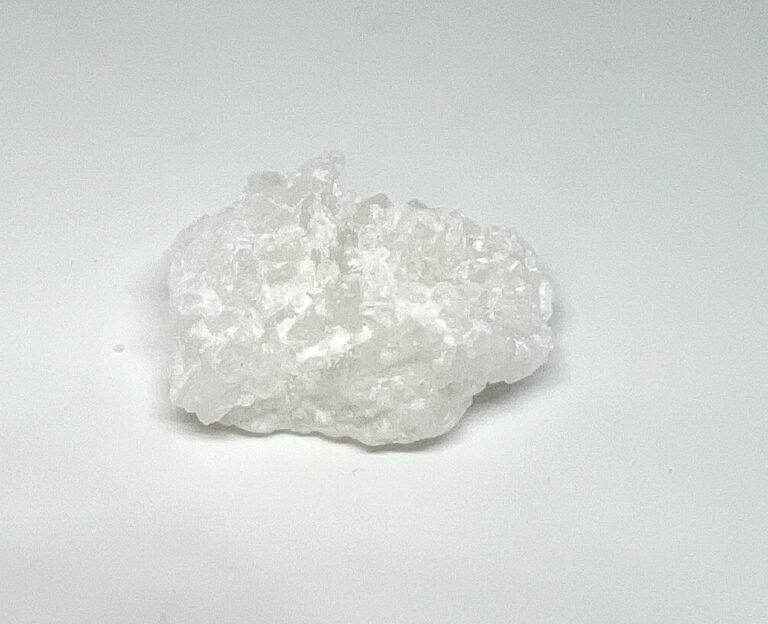
Ketamine Type R is a product listed by Elevated You under its Ketamine and R-Isomer categories. The name refers to an area of interest in ketamine chemistry: the distinction between the R and S forms of the molecule.
Interest in these compounds extends beyond their chemical structure. Researchers have investigated how different ketamine enantiomers interact with the brain and whether they may have different effects. However, scientific interest should not be confused with established medical benefits, and a product name alone cannot confirm its composition or purity.
For anyone researching Ketamine Type R, understanding the terminology, the current state of scientific evidence, and the potential health risks is more useful than relying on marketing descriptions alone.
What Is Ketamine Type R?
The product Ketamine Type R from Elevated You is listed on the company’s website under the Ketamine and R-Isomer categories.
In chemistry, the letter R refers to one of the possible three-dimensional configurations of a molecule. Ketamine has two principal enantiomers, commonly called R-ketamine and S-ketamine. These molecules have the same chemical formula but differ in their spatial arrangement.
The term R-ketamine is also associated with the name arketamine.
Although the two enantiomers are closely related, their biological activity is not necessarily identical. Differences in how molecules interact with biological targets are an important subject of pharmacological research.
It is equally important to recognize that the term Type R does not independently establish the identity, concentration, purity, or manufacturing quality of a particular product. Those characteristics require reliable analytical evidence.
Understanding R-Ketamine and S-Ketamine
Ketamine is a chiral molecule, meaning it exists in two mirror-image forms that cannot be superimposed on one another.
R-Ketamine
R-ketamine, or arketamine, is one of ketamine’s two enantiomers. Researchers have investigated its pharmacological properties and potential relevance to neurological and psychiatric research.
Some preclinical studies have examined its possible antidepressant effects and how its biological activity compares with that of S-ketamine. However, findings from laboratory and animal studies do not automatically establish clinical effectiveness in humans.
The evidence for a potential therapeutic application must be assessed through appropriately designed human clinical trials.
S-Ketamine
S-ketamine, also called esketamine, is the other principal enantiomer. It is the active ingredient in Spravato, a prescription nasal spray authorized in Canada for specific circumstances involving major depressive disorder.
Its clinical use is subject to defined prescribing, distribution, and monitoring requirements.
The existence of an authorized esketamine medicine does not mean that every ketamine-related product has the same medical status.
Racemic ketamine
Conventional racemic ketamine contains both R-ketamine and S-ketamine in approximately equal proportions.
Understanding this distinction helps explain why researchers study the enantiomers separately. It also illustrates why a product described as Type R should not automatically be treated as equivalent to conventional ketamine or prescription esketamine.
What Does the R-Isomer Label Tell You?
A label referring to an R-isomer communicates a claim about the molecular form of a substance. It does not, by itself, establish that the material contains only that enantiomer.
Several separate questions matter when assessing a chemical product:
- Identity: Does the material contain the compound named on the label?
- Enantiomeric composition: Is the claimed R form present, and has its proportion been established using an appropriate analytical method?
- Purity: What other substances or impurities are present?
- Concentration: What amount of the identified compound is actually present?
- Batch consistency: Do the analytical results apply to the specific batch being described?
These are different measurements and should not be treated as interchangeable.
A general purity statement, for example, may not establish enantiomeric composition. Similarly, identifying ketamine in a sample does not necessarily demonstrate that the material contains only R-ketamine.
Reliable documentation should clearly identify the sample, analytical methods, measured results, and limitations of the testing.
What Does Scientific Research Say About R-Ketamine?
Research into ketamine and its enantiomers has attracted interest because ketamine can influence brain signaling through mechanisms that differ from those of many conventional psychiatric medications.
One area of investigation involves glutamate, a neurotransmitter involved in communication between nerve cells. Ketamine interacts with NMDA receptors, which are one type of glutamate receptor.
Researchers are examining how these interactions relate to ketamine’s neurological and behavioral effects.
R-ketamine has been investigated in preclinical studies for possible antidepressant properties. However, the interpretation of these findings requires care.
Laboratory research versus human evidence
Laboratory experiments can help researchers understand biological mechanisms. Animal studies can provide further information about potential effects and guide future research.
Neither type of study establishes that a compound is an effective or safe treatment for people.
Human clinical trials must evaluate outcomes such as symptom improvement, adverse effects, treatment duration, and differences between patient populations. The findings also need to be considered alongside existing evidence and regulatory assessments.
Does research establish that R-ketamine is a proven depression treatment?
No. Research interest in R-ketamine should not be presented as proof that an unspecified R-ketamine product is an established treatment for depression.
The regulatory status of a particular medicine depends on its active ingredient, formulation, clinical evidence, and authorization. Research involving one compound or formulation cannot automatically be applied to another product.
For current information about authorized ketamine-related medicines in Canada, Health Canada’s official drug information resources are the appropriate starting point.
Understanding Product Descriptions and Purity Claims
The product description for Ketamine Type R on Elevated You’s website uses language describing altered perception and detachment from reality. Such descriptions are not independent evidence of a product’s chemical composition or expected effects.
When reviewing information about a ketamine-related product, it helps to separate three types of statements.
Chemical information describes the molecular identity and properties of a substance.
Scientific evidence describes findings from laboratory experiments, clinical studies, and other research.
Marketing language describes how a seller presents a product to potential customers.
These categories can overlap, but one does not replace another.
Terms such as pure, premium, high quality, or pharmaceutical grade should not be accepted as verified scientific findings without supporting evidence. A product photograph, customer review, or seller description cannot independently establish the identity and purity of its contents.
For this reason, the product name should be understood as the name used in the listing rather than proof of a verified chemical specification.
Potential Effects and Health Risks of Ketamine
Ketamine is a dissociative anesthetic that can affect perception, awareness, coordination, and the interpretation of sensory information.
Health Canada identifies several potential short-term effects associated with ketamine, including:
- Dizziness, drowsiness, and confusion.
- Changes in visual and auditory perception.
- Dissociation or a sense of separation from one’s surroundings.
- Nausea and vomiting.
- Increased heart rate and blood pressure.
- Impaired coordination and reduced awareness of injury.
More serious effects can include loss of consciousness, breathing difficulties, cardiovascular complications, and dangerous impairment.
The effects of a particular R-ketamine product cannot be predicted reliably from its name alone, particularly when its composition has not been independently established.
Longer-term concerns
Repeated or chronic ketamine exposure has been associated with urinary tract and bladder problems. Other reported concerns include memory impairment, dependence, and liver or biliary complications.
The risks depend on multiple factors, including exposure, individual health, and the substance’s actual composition.
Anyone experiencing severe confusion, difficulty breathing, chest pain, seizures, or loss of consciousness following exposure to an unknown substance should receive emergency medical assistance.
Ketamine and Medication Interactions
Ketamine can interact with other substances and medications. Combining it with alcohol, opioids, or other central nervous system depressants can increase the risk of dangerous sedation and breathing complications.
Medications that affect blood pressure or the central nervous system may also require careful clinical assessment.
Anyone receiving medical treatment should discuss potential interactions with a qualified healthcare professional. Information about one ketamine formulation should not automatically be applied to another.
Is Ketamine Type R Approved for Medical Use in Canada?
The legal and medical status of a substance depends on the specific product and its authorization.
Ketamine is a controlled substance in Canada. Its legitimate medical use is subject to applicable regulatory requirements.
Health Canada has authorized ketamine for specific anesthetic uses. Esketamine is also authorized as a prescription medicine under the brand name Spravato for specified circumstances involving major depressive disorder.
These authorizations do not automatically extend to R-ketamine products sold under other names.
The presence of a product on a retail website does not establish that it is an approved medicine or that its sale, possession, importation, or use is authorized under Canadian law.
For accurate information, consult Health Canada’s ketamine guidance and the applicable Canadian legislation.
Frequently Asked Questions About Ketamine Type R
Is Ketamine Type R the same as regular ketamine?
Not necessarily. Conventional racemic ketamine contains both R-ketamine and S-ketamine. A product described as Type R claims to refer to the R form, but its actual composition cannot be confirmed from its name alone.
What is another name for R-ketamine?
R-ketamine is also known as arketamine. It is one of the two principal enantiomers of ketamine.
Is R-ketamine the same as esketamine?
No. R-ketamine is arketamine, while esketamine is S-ketamine. They are related molecules with different three-dimensional configurations.
Can the appearance of Ketamine Type R confirm its purity?
No. Appearance cannot establish chemical identity, enantiomeric composition, concentration, or purity. These characteristics require appropriate analytical testing.
Is R-ketamine an established treatment for depression?
R-ketamine has been investigated in scientific research, but research findings should not be treated as proof that an unspecified product is an established or approved depression treatment.
Where can I find information about the Elevated You product?
The Ketamine Type R product provides the listing’s name, category, and available product information. Readers should distinguish these seller-provided details from independently verified chemical or medical information.
Final Thoughts
Ketamine Type R is a product name associated with the broader scientific topic of ketamine enantiomers. Understanding the difference between R-ketamine, S-ketamine, and racemic ketamine provides useful context when evaluating claims about these substances.
However, chemical terminology alone does not establish the composition, purity, safety, or medical status of an individual product.
For readers researching Ketamine Type R from Elevated You, the most reliable approach is to distinguish product descriptions from independently verified evidence, understand the known risks associated with ketamine, and consult authoritative Canadian health and regulatory resources.
Scientific research continues to investigate ketamine’s pharmacology and potential applications, but research findings should always be interpreted within the limits of the available evidence.