Get Free Express Shipping when you place an order over $150





DMT Vape Cartridges Explained: Ingredients, Effects, Risks and What Consumers Should Know

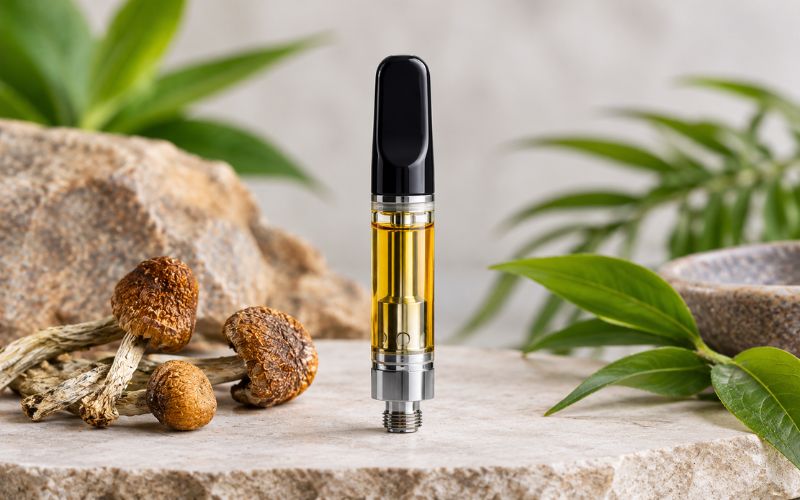
DMT, short for N,N-dimethyltryptamine, is a powerful psychedelic compound known for producing intense and short-lasting changes in perception, thought, mood, and sensory experience. It has been studied in different cultural, scientific, and therapeutic contexts, but it remains a controlled substance in many jurisdictions.
One format that has attracted attention is the DMT 510 vape cartridge. These products combine a standardized-looking vape cartridge format with a substance that can have powerful psychoactive effects.
For anyone researching DMT vape cartridges, it is important to understand what the product format means, what ingredients may be involved, how labeling can differ, and why product quality and legal status require careful consideration.
This guide explains the topic from an educational and consumer-information perspective.
What Is DMT?
DMT stands for N,N-dimethyltryptamine, a naturally occurring tryptamine compound found in a number of plants and other biological sources.
It belongs to the broader family of psychedelic substances and can produce significant alterations in perception and consciousness.
Reported effects can include:
- Changes in visual perception
- Distorted sense of time
- Intense imagery
- Changes in mood and emotional response
- Altered perception of surroundings
- Confusion or disorientation
- Anxiety or fear
- Rapid changes in subjective experience
The experience can vary considerably between individuals and circumstances.
DMT’s relatively short duration compared with some other psychedelics does not mean that its effects are mild. The intensity can be substantial, particularly because the onset can occur rapidly when a substance is delivered through inhalation.
What Is a 510 Vape Cartridge?
The term 510 cartridge generally refers to a widely used physical connection standard for vape hardware.
A 510 cartridge is designed to connect with a compatible battery or vaporizer that uses the same threaded connection.
Importantly, “510” describes the hardware connection rather than the substance inside the cartridge.
The same general cartridge format can be used for different types of oils and formulations. Therefore, seeing “510” on packaging does not by itself establish:
- What substance the cartridge contains
- How concentrated it is
- Whether the contents are authentic
- Whether contaminants are present
- Whether the product has undergone independent laboratory testing
This distinction is particularly important when researching products containing controlled or psychoactive substances.
What Can a DMT Vape Cartridge Contain?
The composition of a cartridge depends on the specific product and its manufacturer.
A cartridge may contain the intended active compound along with other formulation or hardware-related components. However, products obtained through informal or unregulated channels may have incomplete, inaccurate, or misleading ingredient information.
Potential concerns include:
- Undeclared ingredients
- Contaminants
- Residual manufacturing chemicals
- Unknown carrier or diluent substances
- Inaccurate concentration claims
- Contamination introduced during manufacturing or filling
Consequently, a product’s label should not automatically be treated as proof of its actual chemical composition.
Independent laboratory testing provides substantially more useful information than packaging claims alone, although even laboratory testing has limitations depending on the substances tested and analytical methods used.
Why Product Labeling Matters
Clear labeling is particularly important for psychoactive products.
A responsible product label should provide meaningful information about what is actually inside the product rather than relying primarily on marketing terminology.
Consumers researching any psychoactive vape product should pay attention to whether the available documentation identifies:
Active Ingredients
The label should clearly identify the claimed active substance rather than using vague descriptions.
Additional Ingredients
Any additional ingredients should be disclosed where applicable.
Batch Information
A batch or lot number can help connect a product with specific manufacturing and laboratory records.
Laboratory Testing
Where testing is available, consumers should be able to determine what sample was tested and what substances were identified.
Manufacturer Information
Clear manufacturer or responsible-party information makes it easier to distinguish documented products from anonymous or poorly traceable products.
DMT Cartridges and Traditional DMT Research
DMT has been investigated scientifically because of its distinctive psychedelic properties.
Researchers have examined DMT in relation to altered states of consciousness, brain activity, subjective experience, and potential therapeutic applications.
However, research involving a controlled substance under supervised scientific conditions should not be confused with commercial product claims.
A laboratory study involving pharmaceutical-grade or carefully characterized DMT does not automatically validate the composition or safety of an independently marketed vape cartridge.
This distinction is important when evaluating online information.
Why Vape Products Require Additional Consideration
Vaporization introduces another layer of product-quality considerations.
With an edible product, the formulation is primarily consumed through the digestive system. A vape product introduces the lungs as the route of exposure.
This means the composition of the vapor-producing formulation and the materials used in the cartridge can become relevant considerations.
Potential concerns include:
- Unknown additives
- Contaminants
- Degradation products
- Poor manufacturing practices
- Hardware-related contamination
- Inaccurate labeling
The fact that a cartridge fits a standardized battery connection does not mean that the cartridge itself meets a particular quality or safety standard.
Potential Effects of DMT
DMT can produce intense psychedelic effects.
Reported experiences can involve dramatic changes in:
- Visual perception
- Auditory perception
- Sense of time
- Body awareness
- Emotional state
- Sense of identity
- Environmental perception
Some people report experiences they describe as meaningful or profound. Others can experience fear, confusion, panic, or psychological distress.
There is no guarantee that an experience will be positive or predictable.
The psychological environment, individual characteristics, other substances, and the composition of the product can all influence the experience.
Possible Adverse Effects
DMT can also produce physical and psychological effects that may be uncomfortable or dangerous.
Potential effects may include:
- Increased heart rate
- Increased blood pressure
- Nausea
- Dizziness
- Agitation
- Confusion
- Anxiety
- Panic
- Disorientation
- Loss of awareness of the surrounding environment
The risks may be particularly difficult to assess when the composition of a product is unknown.
A person who experiences severe or persistent symptoms after taking a psychoactive substance should seek appropriate medical attention.
Why Unknown Cartridges Present Additional Risks
One of the biggest concerns with unregulated psychoactive cartridges is uncertainty.
A product may be marketed under a particular name while containing a different substance, a mixture of substances, or unexpected contaminants.
This creates several problems.
1. The Label May Not Reflect the Contents
A printed concentration does not independently prove the actual concentration.
2. Ingredients May Be Missing
An incomplete ingredient list can make it difficult to assess potential exposure.
3. Contamination May Not Be Visible
Some contaminants cannot be detected through appearance, smell, or taste.
4. Product Consistency May Be Unknown
Two cartridges carrying similar packaging may not necessarily contain identical formulations.
5. Hardware Quality Can Vary
Cartridge construction, heating components, seals, and materials may differ between manufacturers.
For these reasons, product documentation and independent testing are important considerations when evaluating information about psychoactive vape products.
DMT Compared With Other Psychedelics
DMT belongs to the psychedelic class but is chemically and experientially different from substances such as psilocybin and LSD.
| Characteristic | DMT | Psilocybin | LSD |
| Substance class | Tryptamine psychedelic | Tryptamine psychedelic | Lysergamide psychedelic |
| Naturally occurring | Yes | Found in certain mushrooms | Primarily associated with synthetic production |
| Psychoactive effects | Often highly intense | Can be intense | Can be intense |
| Experience | Frequently described as highly immersive | Variable | Variable |
| Duration | Can be comparatively short depending on route | Generally longer | Generally much longer |
| Legal status | Controlled in many jurisdictions | Controlled in many jurisdictions | Controlled in many jurisdictions |
These differences mean information about one psychedelic should not automatically be applied to another.
Is a DMT Vape Cartridge the Same as DMT?
The underlying active compound may be DMT, but the product format is different.
A cartridge is a delivery system containing a formulation. The formulation and hardware can introduce additional variables that are not relevant to the isolated chemical itself.
Therefore, discussions about the pharmacology of DMT should be separated from claims about the quality or safety of a particular commercial cartridge.
Legal Status of DMT
DMT is subject to strict legal controls in many countries.
The exact legal status can vary depending on jurisdiction, possession, production, distribution, research authorization, and other circumstances.
In the United States, DMT is federally classified as a Schedule I controlled substance.
Other countries have their own regulatory frameworks.
Because laws can change, anyone researching DMT should consult the relevant government or regulatory authority for their jurisdiction rather than relying solely on product websites, social media posts, or older articles.
How to Evaluate Information About DMT Cartridges
When researching a DMT cartridge or any other psychoactive product, consider the quality of the information available.
Look for Specific Information
Be cautious of descriptions that rely entirely on broad terms such as:
- Premium
- Pure
- Pharmaceutical grade
- Lab tested
- Ultra potent
- 100% authentic
These terms have little value unless supported by verifiable documentation.
Look for Independent Evidence
If laboratory testing is claimed, useful documentation should identify the tested product or batch and explain what was actually analyzed.
Check the Ingredient Information
A clear ingredient list is preferable to vague proprietary terminology.
Consider the Source
Anonymous listings and unverified social media claims provide considerably less confidence than transparent, traceable documentation.
Common Questions About DMT Vape Cartridges
What does 510 mean on a DMT vape cartridge?
“510” generally refers to the threaded connection used between a cartridge and compatible vape hardware. It does not describe the chemical composition of the cartridge.
Is DMT the same as a cannabis vape cartridge?
No. DMT and cannabis contain different psychoactive compounds with different pharmacological properties. A compatible vape format does not make the substances equivalent.
Can you tell what is inside a cartridge from its appearance?
No. Color, thickness, packaging, or cartridge design cannot reliably establish the chemical composition of a product.
Are all DMT cartridges the same?
No. Formulations, manufacturing methods, hardware, labeling, and product quality can vary significantly.
Does a “lab tested” label guarantee safety?
Not necessarily. The value of a laboratory claim depends on the laboratory, testing method, sample identity, substances analyzed, and whether the report corresponds to the actual product or batch.
Is DMT legal?
DMT is a controlled substance in many jurisdictions, including the United States. Laws differ internationally and can change over time, so local government guidance should be consulted.
Can DMT cause anxiety or panic?
Yes. DMT can produce intense psychological effects, and some individuals may experience anxiety, fear, confusion, or panic.
Final Thoughts
DMT vape cartridges combine a standardized-looking vape format with a powerful psychedelic substance. Understanding the distinction between the 510 hardware format and the chemical contents of the cartridge is essential when researching these products.
The most important questions are not simply what a product looks like or how it is marketed. Consumers should consider what the product claims to contain, whether those claims are supported by independent testing, whether ingredients are clearly disclosed, and what laws apply in their jurisdiction.
Because DMT can produce intense psychological and physical effects and is legally controlled in many places, information about these products should be approached carefully.
Educational information can help readers understand the terminology and risks, but it should not be treated as a substitute for medical advice, laboratory verification, or applicable legal guidance.
About Elevated You
Elevated You provides educational information about mushroom, psychedelic, and related product categories. Product descriptions and marketing claims should always be evaluated critically, particularly when the composition or regulatory status of a product is unclear.