Get Free Express Shipping when you place an order over $150





Magic Mushroom Chocolate vs Gummies

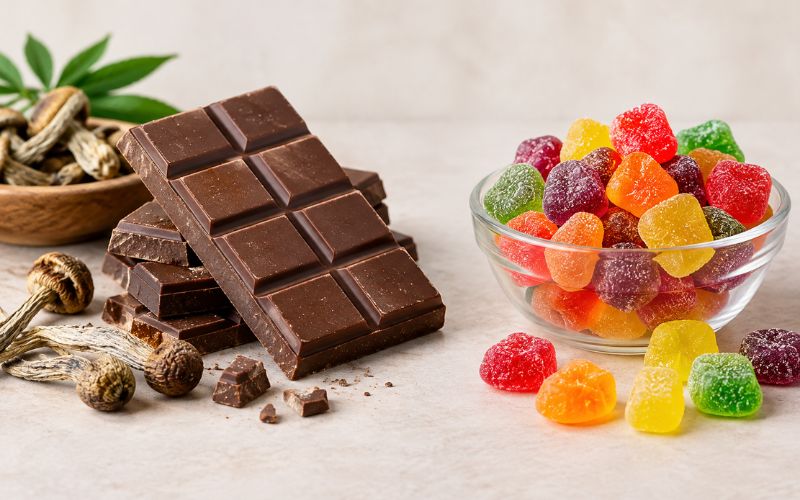
Magic mushroom chocolate and gummies are two edible formats that often appear similar at first glance. Both combine a familiar food format with mushroom-related ingredients, but their composition, texture, manufacturing process, and labeling can differ considerably.
For consumers researching mushroom edibles, understanding these differences is more important than choosing a product based on flavor or appearance alone.
A chocolate bar may contain cocoa, sugar, milk ingredients, and other confectionery components, while gummies typically use a gel-forming base, sweeteners, flavoring agents, and coloring. The active ingredients, if present, are a separate consideration and cannot be reliably identified by the product’s appearance.
So, what separates magic mushroom chocolate from gummies? This guide examines their ingredients, formats, product characteristics, quality considerations, and important safety differences.
What Is Magic Mushroom Chocolate?
Magic mushroom chocolate refers to a chocolate-based edible marketed as containing mushroom-derived or psychedelic compounds.
These products are generally presented in familiar confectionery formats, including chocolate bars, squares, and molded pieces.
The chocolate itself may contain conventional ingredients such as:
- Cocoa solids or cocoa powder
- Cocoa butter
- Sugar or alternative sweeteners
- Milk powder or dairy ingredients
- Emulsifiers such as soy lecithin
- Natural or artificial flavorings
Some products may also list mushroom powder, mushroom extracts, or other active compounds.
However, the ingredient label does not independently establish the identity, purity, or concentration of any psychoactive ingredient. Research published in JAMA Network Open has identified discrepancies between declared and detected ingredients in certain unregulated mushroom edibles.
This makes the distinction between a product’s advertised composition and its verified composition particularly important.
What Are Magic Mushroom Gummies?
Magic mushroom gummies are chewable confectionery products marketed with mushroom-related ingredients.
Unlike chocolate, gummies rely on a flexible, gel-like structure. Their texture comes from ingredients that create and maintain the gummy consistency.
Common confectionery ingredients include:
- Glucose syrup or corn syrup
- Sugar
- Gelatin or pectin
- Citric acid
- Natural or artificial fruit flavors
- Food coloring
- Vegetable oils or glazing agents
Gelatin is commonly used in traditional gummies, while pectin provides a plant-based alternative.
The term “mushroom gummy” does not necessarily mean that a product contains verified psilocybin. Some products are made with functional mushroom ingredients, while others are marketed as psychedelic edibles.
Reading the complete ingredient declaration is essential to understanding what a particular product claims to contain.
Magic Mushroom Chocolate vs Gummies: Key Differences
Although both belong to the edible category, chocolate and gummies have different physical properties and ingredient structures.
| Comparison Factor | Mushroom Chocolate | Mushroom Gummies |
| Primary base | Cocoa and cocoa butter | Gelatin or pectin |
| Texture | Firm, smooth, or creamy | Soft, chewy, or gelatinous |
| Main ingredients | Cocoa, sugar, fats | Syrup, sweeteners, gelling agents |
| Flavor profile | Chocolate-based | Fruit-based or flavored |
| Common format | Bars and squares | Individual molded pieces |
| Allergen considerations | May contain milk, soy, or nuts | Depends on formulation |
| Vegan suitability | Depends on dairy ingredients | Depends on gelatin or pectin |
| Ingredient verification | Requires product-specific testing | Requires product-specific testing |
| Quality assessment | Label transparency and laboratory evidence | Label transparency and laboratory evidence |
The most important distinction is that format alone does not establish product quality, active ingredient content, or safety.
1. Ingredient Differences: Chocolate vs Gummies
The biggest difference between these formats begins with their base ingredients.
Chocolate-Based Ingredients
Chocolate formulations generally depend on cocoa-derived ingredients and fats to create their characteristic flavor and texture.
Cocoa butter contributes to the chocolate’s structure, while sugar balances the natural bitterness of cocoa.
Depending on the recipe, chocolate may also contain milk solids, vanilla, lecithin, or other flavoring ingredients.
From a dietary perspective, consumers may need to check for:
- Dairy
- Soy
- Tree nuts
- Added sugar
- Other declared allergens
Chocolate can also be sensitive to heat, which may affect its texture and physical quality during storage.
Gummy-Based Ingredients
Gummies use a different formulation designed to produce a flexible, chewable texture.
Gelatin is derived from animal collagen, whereas pectin is a plant-derived gelling agent commonly used in vegan confectionery.
Citric acid may provide tartness and contribute to the product’s flavor profile. Syrups and sweeteners provide sweetness and influence texture.
Consumers checking dietary suitability should review:
- Gelatin or pectin
- Sugar content
- Artificial colors
- Flavoring ingredients
- Allergen declarations
Neither format is automatically healthier or more suitable for every dietary preference.
2. Product Formats and Physical Characteristics
Chocolate and gummies differ in how they are manufactured and presented.
Chocolate Formats
Chocolate products are commonly molded into bars, blocks, or smaller squares.
Their physical structure depends on the chocolate formulation, cocoa butter content, and manufacturing conditions.
Heat exposure can cause melting or changes in appearance, while temperature fluctuations may lead to a whitish surface known as chocolate bloom.
Chocolate bloom is generally a quality or appearance issue rather than proof of contamination.
Gummy Formats
Gummies are produced by forming a gel structure that holds their shape.
Their final texture depends on the gelling agent, moisture content, sweeteners, and manufacturing process.
Some gummies are firm and elastic, while others have a softer consistency.
Moisture and storage conditions can affect texture, stickiness, and shelf stability.
These physical differences explain why chocolate and gummies require different formulation and quality-control considerations.
3. Does Chocolate or Gummy Format Determine Potency?
No. The format does not establish the potency of a mushroom edible.
A chocolate bar is not automatically stronger than a gummy, and a gummy is not necessarily more consistent simply because its pieces look identical.
The actual composition depends on the ingredients used, manufacturing controls, and analytical verification.
A 2025 laboratory study published in JAMA Network Open examined commercially available mushroom edibles and found discrepancies between product labels and detected compounds. Some tested products contained undeclared substances, while others did not contain the active ingredients claimed on their labels.
The study involved a limited sample and should not be interpreted as representing every product on the market. However, it demonstrates why marketing descriptions alone are insufficient evidence of composition.
4. Texture, Flavor and Consumer Expectations
The sensory experience is one of the most noticeable differences between these edible formats.
Chocolate offers a familiar cocoa flavor, with variations depending on whether the formulation is dark, milk, or another chocolate style.
Gummies generally have a fruit-forward flavor profile, with a chewy consistency and a sweet or tart finish.
| Feature | Chocolate | Gummies |
| Flavor foundation | Cocoa | Fruit or confectionery flavor |
| Mouthfeel | Creamy or firm | Chewy |
| Temperature sensitivity | Can melt | Can soften or become sticky |
| Main texture factor | Cocoa butter and fat composition | Gelling agents and moisture |
| Dietary variations | Dairy-free or milk chocolate | Gelatin or plant-based pectin |
These are confectionery differences, not evidence of differences in psychoactive effects.
5. Quality and Label Transparency
When examining any mushroom edible, the quality of its documentation matters more than its packaging.
A responsible product assessment should consider the following:
Complete Ingredient Information
The label should identify the ingredients rather than relying on broad descriptions such as proprietary mushroom blends.
Independent Laboratory Testing
Laboratory reports should clearly identify the sample tested, the analytical method, and the substances detected.
A report showing that a sample was screened does not necessarily establish purity, complete composition, or safety.
Accurate Product Claims
Claims about potency, purity, or therapeutic effects should not be accepted without appropriate evidence.
Manufacturing Information
Clear information about manufacturing standards, batch identification, and storage conditions helps distinguish documented product information from unsupported marketing claims.
6. Storage and Shelf-Life Differences
Chocolate and gummies have different physical characteristics, which influence their storage requirements.
Chocolate is sensitive to temperature fluctuations and may develop bloom or lose its original texture.
Gummies can be affected by moisture, heat, and exposure to air. Their texture may change if they are stored under unsuitable conditions.
For either format:
- Follow the manufacturer’s stated storage instructions.
- Keep products in their original, clearly labeled packaging.
- Protect them from children and pets.
- Do not consume products with damaged packaging, unclear labeling, or unexpected changes in appearance.
An expiry date or attractive appearance does not verify the chemical composition of a psychoactive edible.
7. Important Safety and Legal Considerations
The term “magic mushroom” commonly refers to mushrooms containing psilocybin or psilocin, psychoactive substances that can alter perception, mood, and thinking.
Possible adverse effects include anxiety, panic, confusion, nausea, increased heart rate, and elevated blood pressure. Experiences can be unpredictable, particularly when the composition of an edible is unknown.
Combining psychoactive substances with alcohol or other drugs may increase risks.
In Canada, psilocybin and psilocin are controlled substances. Their possession, production, and sale are prohibited unless specifically authorized under applicable federal rules.
Health Canada has not approved psilocybin products for general therapeutic sale. Medical research and authorized access follow separate regulatory pathways.
For current information, consult Health Canada’s official guidance on psilocybin and psilocin.
Magic Mushroom Chocolate vs Gummies: Which Is Different?
There is no universal winner between chocolate and gummies because the two formats serve different confectionery preferences.
Chocolate is defined by its cocoa-based composition, firm structure, and characteristic flavor. Gummies are defined by their gel-based formulation, chewable texture, and fruit-style flavor profiles.
The meaningful comparison is not simply which format looks more appealing. It is whether the product has transparent ingredients, credible testing information, accurate labeling, and appropriate regulatory status.
For anyone researching mushroom edibles, understanding these distinctions provides a more reliable foundation than relying on packaging claims or assumptions about the format.
Frequently Asked Questions
1. What is the main difference between magic mushroom chocolate and gummies?
The main difference is their base formulation. Chocolate uses cocoa-derived ingredients and fats, while gummies use gelling agents such as gelatin or pectin, along with syrups, sweeteners, and flavorings.
2. Do mushroom chocolates and gummies contain the same ingredients?
No. Their confectionery ingredients differ significantly. Both may be marketed with mushroom-derived compounds, but the actual active ingredients must be verified independently.
3. Are mushroom gummies always vegan?
No. Gummies made with gelatin are animal-derived. Pectin-based formulations can be suitable for vegan diets, but consumers should check the complete ingredient list.
4. Can mushroom chocolate melt during storage?
Yes. Chocolate is sensitive to heat and temperature changes. It may soften, melt, or develop chocolate bloom, affecting its appearance and texture.
5. Are all mushroom gummies made with psilocybin?
No. Mushroom gummies may contain functional mushroom ingredients, other mushroom-derived compounds, or substances that differ from their advertised descriptions. The product category alone does not confirm the presence of psilocybin.
6. How can consumers verify the ingredients in mushroom edibles?
Look for detailed ingredient declarations and independent analytical reports that identify the tested sample and compounds detected. A basic screening test cannot guarantee that a product is safe or fully characterized.
7. Are magic mushroom chocolate and gummies legal in Canada?
Products containing psilocybin or psilocin are subject to Canada’s controlled-substance laws. Possession, production, and sale are generally prohibited unless specifically authorized.
Final Thoughts
Magic mushroom chocolate and gummies may share a similar product category, but their ingredients, textures, manufacturing methods, and storage characteristics are different.
Chocolate is built around cocoa and fat-based ingredients, while gummies rely on a gel structure and sweetened confectionery base. Neither format guarantees ingredient accuracy or consistent composition.
For readers comparing these products, the most useful factors are transparent labeling, verifiable testing, dietary ingredient information, and awareness of the applicable legal and safety requirements.
About Elevated You
Elevated You provides information about mushroom-related products and edible formats. Readers should review product-specific ingredient declarations and applicable regulatory guidance rather than treating marketing descriptions as proof of composition or safety.